Introduction
A security certificate is a result people can check. It cannot prove more than its scheme, scope, or date can show.
It has value, but does not prove lasting safety. Match it to the choice at hand. Then check if fresh evidence still backs that choice. The five-check Moeenism Proof Chain helps a non-specialist do this without running a new audit.
Three definitions that set the boundary
In-scope certificate: a result issued under a named security scheme. Its meaning comes from that scheme’s scope and review route. NCSC Cyber Essentials is the public example here. Its rules are not universal.
Unsupported claim: “certified” or “compliant” with no clear scheme, issuer, holder, scope, review route, current status, or public record where one should exist.
Excluded other assurance artifacts: management-system certificates, audit or attestation reports, penetration-test reports, and contractual assurance packs serve different aims. This article does not compare them; read each on its own terms.
The bounded thesis: status is not the same as proof
Rely on a security certificate only for what its scheme, scope, review method, assurance level, dates, and standing support. Treat it as a starting point. Then make checks that fit the risk: fresh evidence, real effect, owned gaps, and major change.
NIST Cybersecurity Framework 2.0 gives broad risk context. NCSC Cyber Essentials is the scheme example: five technical controls, a checked self-review route, deeper Plus tests, and certificate search. CIS Controls ranks safeguards. NCSC 10 Steps adds risk and oversight. None prescribes the Moeenism Proof Chain; it is an original aid for trust and escalation.
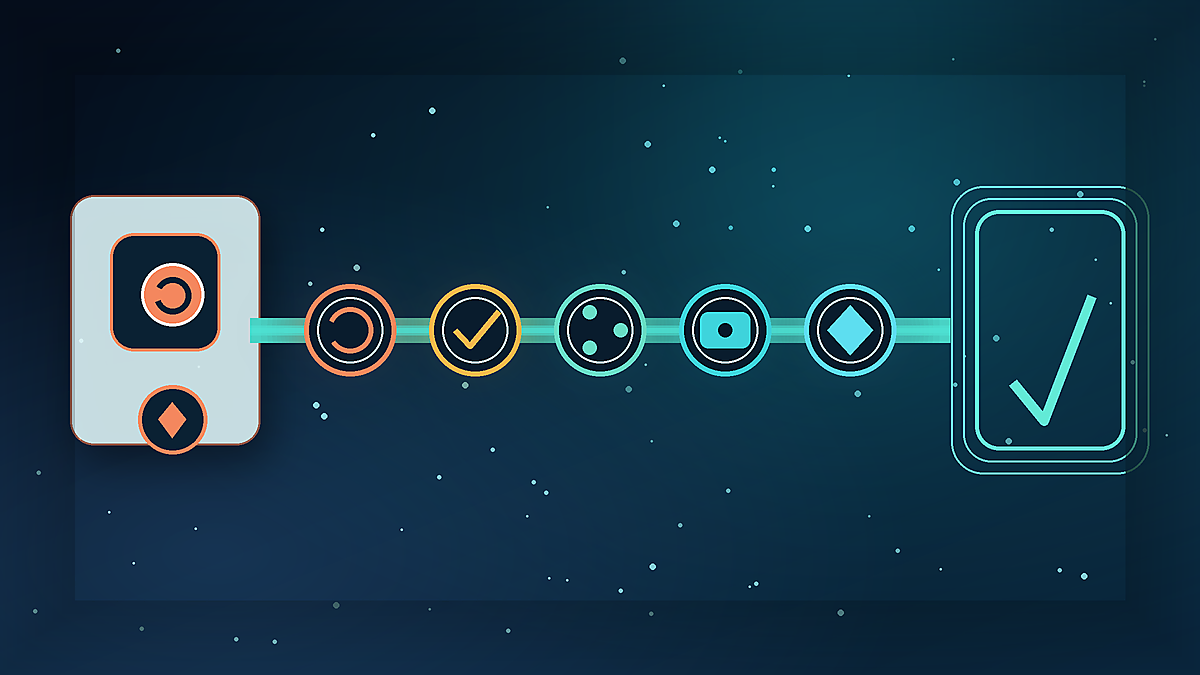
The Moeenism Cybersecurity Proof Chain
1. Scope & Standing
Ask: Is this the named holder’s real and current result for the exact scheme, route, systems, sites, and choice at hand?
Check the issuer or public registry where the named scheme provides one. Match the ID, holder, route, scope, issue date, published status, and exclusions. Do not make up rules about when a result is valid.
If names are sensitive, accept a redacted scope note or issuer note. A non-specialist can match names, dates, and scope. But disputes about meaning go to the scheme owner or a skilled assessor. Clarify vague facts, escalate scope disputes, and reject claims that cannot be checked.
2. Current Evidence
Ask: Is there fresh evidence that one key control is still operated, maintained, and owned after the review?
Evidence may be a dated asset list, patch summary, access review, or owner note. Check its source, owner, date range, scope, and fit. For example, an old screen shot with no date shows little.
Do not ask for raw logs by default. Use a redacted total, assessor letter, controlled screen share, contract statement, or a certification-body answer where the named scheme uses one. A non-specialist may check age and basic fit, not read logs, scan data, or full system settings. Fix stale records. Escalate blocked or conflicting evidence.
3. Effectiveness
Ask: Was the control tested for an outcome, or was it just written down or switched on?
A test could show that a removed user lost access, a patch reached a fair sample, or a restore check ran to the end. A third party may give an assessor note or scoped pass/fail result. Look for the aim, date, sample, pass rule, result, owner, and open gaps.
Do not confuse a tool with evidence that it works. Do not ask for exploit steps, passwords, or sensitive system data. Test design, sample strength, harm, and compensating controls need expert review. Fix failed tests and escalate weak samples. For high impact, reject or defer if the control failed or was not tested.
4. Exceptions & Ownership
Ask: What key gaps, exclusions, compensating controls, or accepted risks remain? Who owns the next choice?
Ask for a dated summary of scope, likely harm, compensating control, owner, approval, state, and review date. For example, share the count of open gaps and any major gap under safe terms, not the full vulnerability list.
A non-specialist can spot a missing owner, old date, or clash with a broad claim. But harm and compensating controls need expert judgement. Fix missing owners and dates. Escalate major gaps. Reject risk that is too high or cannot be judged. Record one result: accept with a condition, fix, escalate, or reject.
5. Change Trigger
Ask: Has a major change made the certificate or its supporting evidence less relevant to today’s choice?
Compare review dates with changes in scope, platform, owner, access, supplier, host, or service design. Keep a dated change note and last review date. If details are sensitive, accept a signed no-major-change note or assessor check.
A non-specialist can compare dates and scope, not decide if a deep tech change voids the result. Check the named scheme’s rules, then ask its owner or assessor. For high impact, recheck or seek help. Accept only when no major conflict remains.
The same care applies to browser extension risk checks, software update safety, and security awareness. Evidence should improve a choice, not add process.
Match the depth to the impact
Low impact
This means no privileged access, sensitive data, critical-service dependency, or meaningful business interruption risk. Check the issuer or public registry where the named scheme provides one, plus the holder, scheme, route, scope, dates, and fit. Stop: accept when the result is real, current, and relevant. If not, clarify or reject.
Medium impact
This may involve routine access, limited sensitive data, or disruption to a non-critical service. Add one fresh, safe sample. Check major gaps and name an owner and review date. Stop: accept, fix a small gap, or escalate blocked or conflicting evidence.
High impact
This includes privileged access, sensitive or regulated data, a critical service, a large blast radius, or hard recovery duties. Use contract terms, protected evidence, a skilled independent review, and accreditation where the named scheme uses it. Add a risk-owner choice. Stop: escalate. Reject or defer if key scope, standing, or evidence is in doubt.
One certificate, two valid decisions
Take a valid certificate with a clear scope. It may be enough to shortlist a tool that handles only public information and has low impact. The buyer checks the public registry where the named scheme provides one, then reviews the scope. But the same result may not be enough for a service that will hold sensitive data or gain privileged access.
The certificate did not become false. The risk changed. The second case needs more evidence because its harm, access, and recovery needs are greater. This public-safe example guards against two bad views. Do not dismiss a useful certificate or treat it as a badge that proves all forms of safety.
The strongest counterargument: this can become a shadow audit
Known schemes set their own review rules. A buyer’s list can repeat skilled work, expose sensitive information, burden small firms, and give false comfort through a weak paper check. That is a fair concern.
The answer is restraint. This chain is not a second audit. Low-impact choices can stop after core checks. Medium-impact requests should stay small. High-impact choices need contractual assurance or skilled independent review, not a long file list judged by an unskilled reader.
Doubt remains. Evidence may be real but old, narrow, confidential, incomplete, or hard to judge. A certificate and one sample cannot prove there is no breach, each control will always work, or the scope is complete.
The non-specialist stopping boundary
A non-specialist may check identity, the issuer or public registry where the named scheme provides one, scope, dates, stated standing, owners, and clear conflicts. Stop before judging raw logs, ease of attack, sample quality, test design, level of harm, compensating controls, or deep tech change.
Send those points to the scheme owner, certification body where the named scheme uses one, skilled assessor, contractual assurance team, or risk owner. Knowing when to stop is part of sound assurance.
Key Takeaways
- A certificate backs a bounded result, not permanent or broad safety.
- Start with the named scheme, route, scope, dates, and standing that it states.
- Add fresh evidence, effect, gap, and change checks only to the depth the choice needs.
- Protect sensitive data with redacted totals, safe summaries, or outside confirmation.
- End with a clear result: accept, fix, escalate, defer, or reject.
Frequently Asked Questions
Does a cybersecurity certificate prove an organization is secure?
No. It backs the result set by its scheme, route, scope, and date. It does not prove lasting safety, full cover, or that no breach exists.
Should every supplier provide raw security logs?
No. Raw logs can expose sensitive information and may be hard to interpret. A redacted summary, assessor letter, controlled screen share, or scoped statement is often safer and more useful.
When is certificate verification alone enough?
It may be enough for a low-impact choice with no privileged access, sensitive data, critical-service dependency, or meaningful business interruption risk. But the result must be real, current, and relevant.
When should a specialist take over?
Escalate when the choice has high impact. Also seek help when someone must judge raw technical evidence, test quality, harm, compensating controls, or the effect of a major technical change.
Conclusion
The right question is simple: does this certificate support the trust you plan to place in it today?
Check it on its own terms. Add only the evidence checks that fit the access, data, service need, and recovery risk. Keep each request small. Protect sensitive information. Stop when expert judgement is due. This respects skilled certification without giving one status sign more weight than it can bear.
Sources and Further Reading
- NIST Cybersecurity Framework — broad risk context; it does not set the Moeenism Proof Chain.
- NCSC Cyber Essentials overview — the scheme used as the public example for routes, controls, and certificate search.
- CIS Controls — a ranked list of safeguards, not proof that any firm uses them.
- NCSC 10 Steps to Cyber Security — a wider view of risk and oversight.